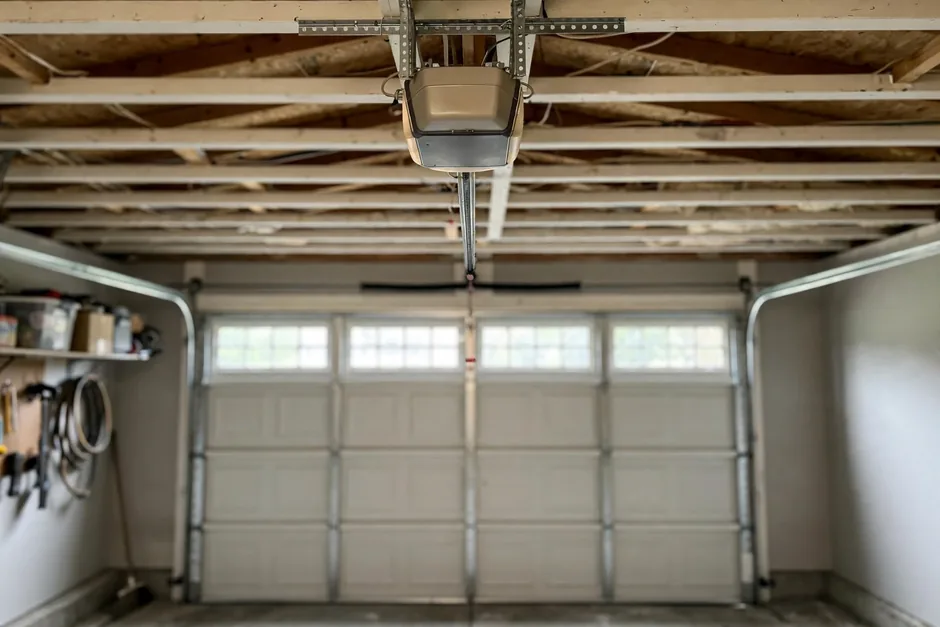
How chain and belt drives differ
A chain drive pulls the door with a metal chain along a rail, much like a bicycle chain, while a belt drive uses a reinforced rubber-style belt on the same kind of rail. Both do the same job, lifting and lowering a sectional door, and both work with the same safety sensors and remotes. The difference is in how they sound, how they wear and how much upkeep they need. Neither type is right for every home, and the door weight, the garage position and how often the door is used all matter more than the drive type alone. Call Springfield Garage Door Rescue at (615) 235-0324 if you are choosing between them for a replacement opener.
Noise: the main difference most people notice
Belt drives are usually quieter and smoother, because the belt does not rattle on the rail the way a chain can. That matters most when the garage sits under a bedroom, or when the door is used early in the morning or late at night. Chain drives are usually louder, with a characteristic rattle, though a well adjusted chain on a well balanced door is quieter than a worn chain on a dragging door. If your current opener is noisy, the fault may be worn rollers or a dragging door rather than the drive type, so get the door checked before blaming the opener. For noisy doors, see roller replacement.
Durability and maintenance
Chain drives are hard wearing and have been used for decades, which is why they are common on heavier doors. They need occasional chain tension adjustment and lubrication, and a stretched chain will make the door jerk or rattle. Belt drives need less routine adjustment and run smoother, but the belt itself can wear or crack over a long life, and belt replacement is a pro job. Both types need the door itself in good shape. A drive of either type will wear out fast if it is pulling against a weak spring or dragging rollers, so springs, cables and rollers should be checked first. For opener faults, see opener repair.
Which homes suit which drive
| Situation | Usually suits |
|---|---|
| Garage under a bedroom, or door used at night | Belt drive, for quieter running |
| Detached garage, or door used rarely | Chain drive, for hard wearing simplicity |
| Heavy or wide door | Either, matched to door weight by a pro |
| Door already noisy or dragging | Fix the door first, then choose the drive |
Cost, in general terms
In general terms, chain openers tend to cost less than belt openers for a comparable model, and belt openers tend to cost more for their quieter running. That is a general pattern, not a price, since models, horsepower and features vary widely, and the door itself may need springs or rollers at the same time. Any opener price should be a written price for your door, including fitting and testing, not a drive type alone. Homes in Canterbury Estates often ask about belt drives first, since opener noise is the usual complaint there.
Frequently Asked Questions
1. Is a belt garage door opener quieter than a chain opener?
Usually, yes. A belt does not rattle on the rail the way a chain can, so belt drives run smoother and quieter, which matters most for garages under bedrooms.
2. Do chain garage door openers last longer than belt openers?
Chain drives are hard wearing and have a long history on heavier doors, while belt drives need less adjustment but the belt itself can wear over a long life. Either type lasts best on a well balanced door.
3. Can I switch from a chain to a belt opener?
Usually, yes, as a replacement opener job, but the new opener must suit the door weight and size, and the springs and rollers should be checked at the same time.
4. Why is my chain opener suddenly louder?
A stretched chain, a dragging door, worn rollers or a weak spring can all make a chain opener louder. Get the door checked before replacing the opener, since the drive may not be the fault.
5. Do belt openers need less maintenance?
They need less routine adjustment than chains, but they still need the door, springs and sensors checked. A belt opener pulling against a weak spring will wear out fast, whatever the drive type.
Get help with your garage door in Springfield
If you would rather not guess, call Springfield Garage Door Rescue at (615) 235-0324. Tell us what the door is doing and we will talk through the next step and give you a price before work starts.